The Curious Life – How I Learned to Connect the Dots
Most people think a life is made up of events.
I don’t.
Looking back, I see a life made up of ideas.
Some people collect stamps. Others collect cars. I’ve collected questions.
Why do cities succeed while others fail?
Why do civilizations collapse?
How can something as ordinary as salt, codfish, cotton, or a steel shipping container change the course of history?
Why do some leaders think three moves ahead while others can’t see beyond tomorrow?
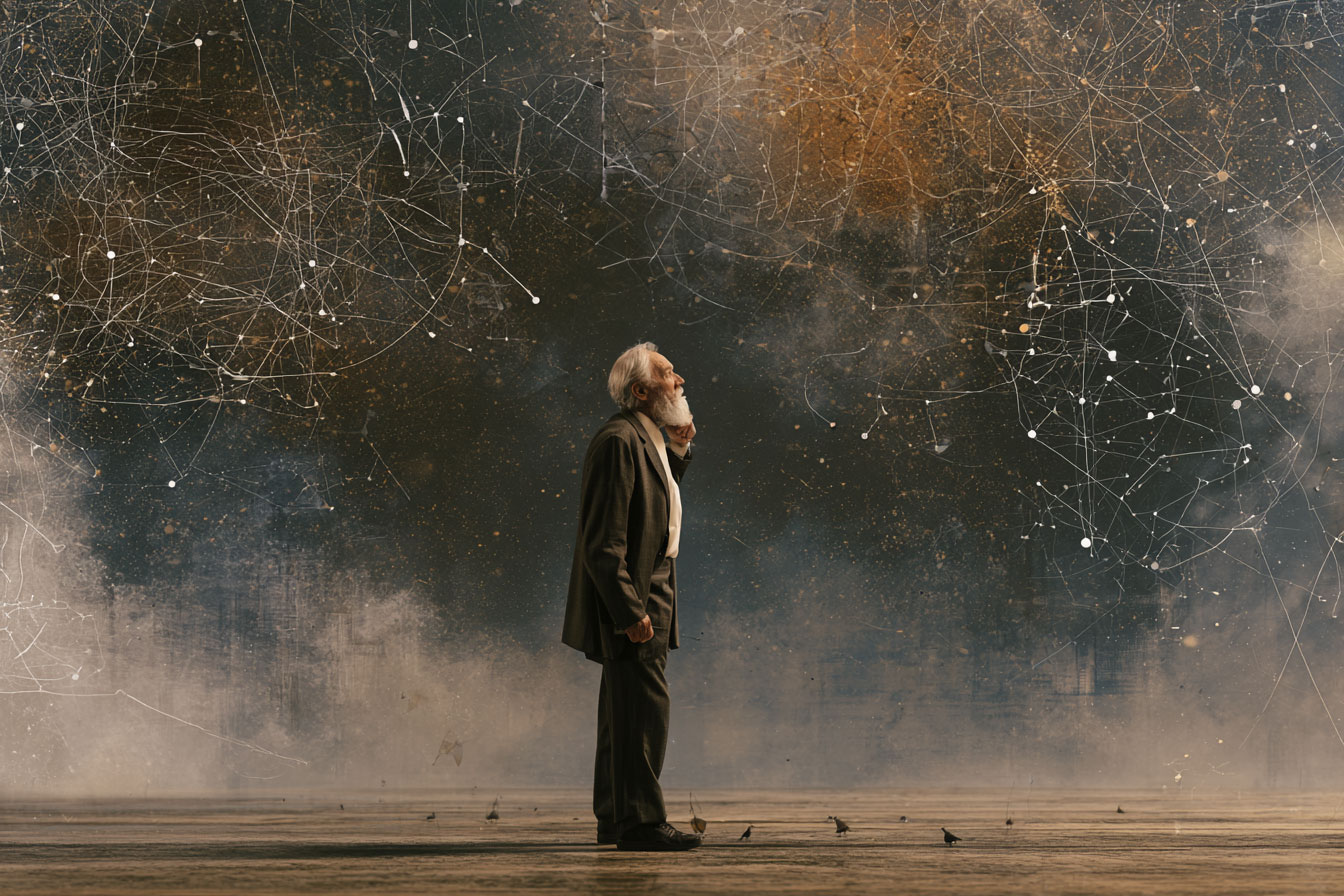
Somewhere along the way I discovered that the world isn’t divided into history, economics, politics, engineering, philosophy, and business. They’re all part of the same story. Pull one thread and eventually they all move.
That realization probably began with James Burke’s Connections. I can still remember watching each episode and thinking, “Nobody ever taught me history this way.” Burke wasn’t interested in kings and battles. He was interested in ideas colliding with other ideas and creating unexpected consequences.
It changed the way I looked at everything.
Since then, I’ve spent a lifetime reading—not to accumulate facts, but to build a map of how the world works. Every book added another piece. Mark Kurlansky showed me that commodities could shape civilizations. Eric Cline explained how civilizations can unravel. Philosophy taught me to ask better questions. Economics explained incentives. Business taught me to think in systems. Local government reminded me that every decision has trade-offs.
Eventually I realized I wasn’t reading different subjects.
I was reading one very large book written by humanity.
That way of thinking changed how I approached business, public service, and life. I began asking questions other people didn’t seem interested in asking.
What happens next?
What are the unintended consequences?
What assumptions are we making?
What problem are we really trying to solve?
When I talk with college students, I ask if they’ve ever written a business plan. Most have. Then I ask if they’ve written a personal business plan. That question usually stops the conversation cold.
We spend years planning companies, but almost no time planning ourselves.
Where do I want to live?
What kind of life do I want?
How much money is enough?
What kind of person do I hope to become?
The answers change over time, but writing them down forces you to think.
As I get older, I’ve become less interested in certainty and more interested in curiosity.
I’ve learned that almost every complicated problem becomes more understandable if you’re willing to read one more book, ask one more question, or listen to someone who knows something you don’t.
That’s become my retirement plan.
Read.
Think.
Write.
Repeat.
If there is an afterlife, I hope there are libraries.
If not, I suppose I’ll have to settle for good conversations around a campfire in Sedona.