
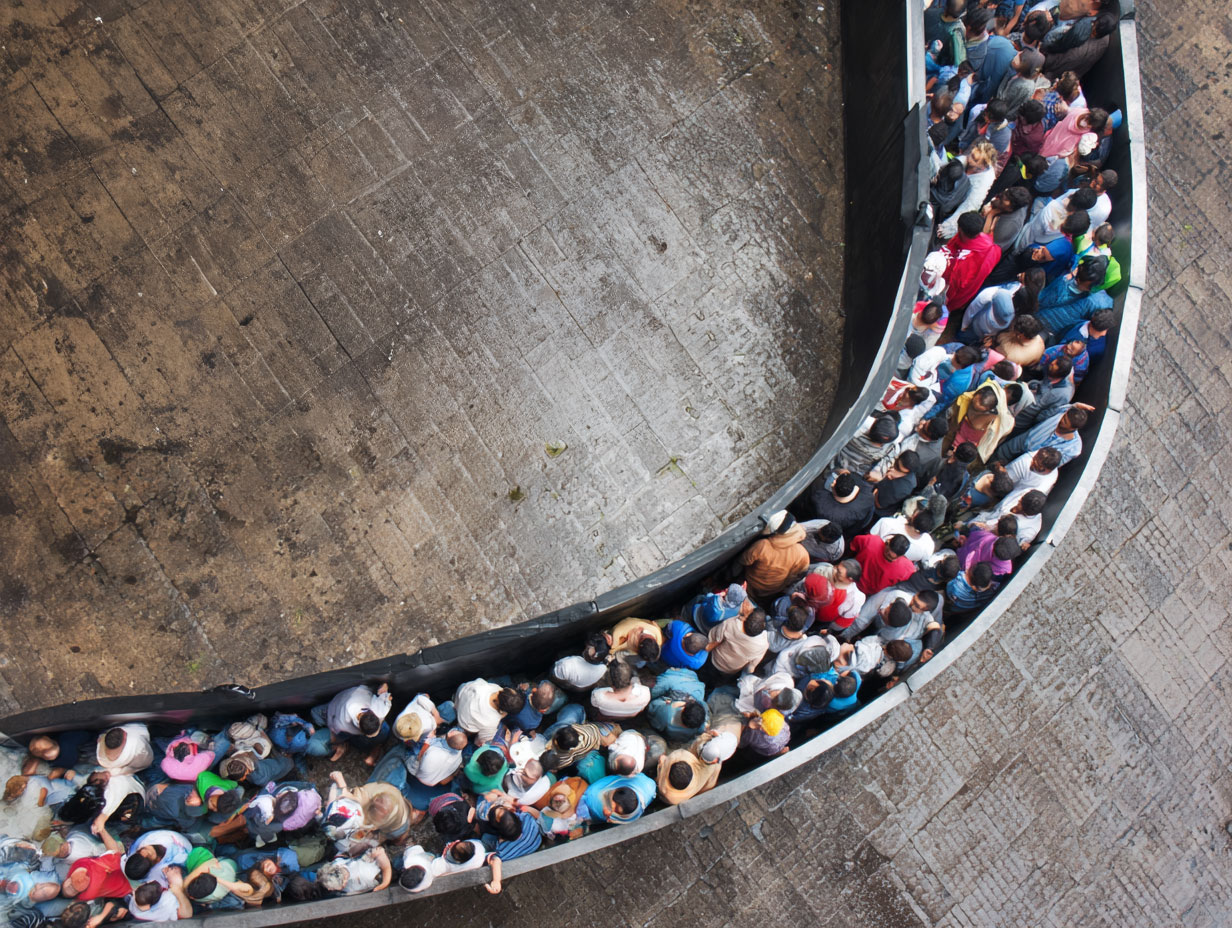
Cattle are not forced to slaughter. They are guided.
The modern meat industry learned long ago that fear slows the process. Panic causes injuries, resistance, and delays. Calm animals move more efficiently, follow more obediently, and walk straight into the final chamber without understanding where the path ends.
That’s why slaughter chutes are curved. It’s why the lighting is soft, the turns are gentle, and the walls are high. The system doesn’t function through brutality. It functions through design.
We are now being promised the same kind of efficiency in the human economy.
Artificial intelligence is being sold as the next great leap forward—automating tasks, boosting productivity, cutting costs, unlocking innovation. We’re told it will “free” people from drudgery and open new doors of opportunity… eventually.
But in the meantime, millions of jobs are quietly being erased—especially the routine white-collar positions that once provided stability, mobility, and a sense of purpose.
So what do cattle and workers have in common?
Both are being moved forward by systems designed to minimize resistance while hiding the true destination.
Modern capitalism prioritizes shareholders above all else. In that framework, people are not people. They are costs—line items to be reduced. Every new piece of technology is judged by a single metric: does it shrink the payroll and fatten the margin?
And like cattle in a chute, workers are gently reassured as they move forward. The language is comforting: reskilling, upskilling, agile workforces, digital transformation, the future of work. The path winds just enough to keep the end out of sight.
The destination, however, remains the same.
We hear every day about the “new” economy being built by artificial intelligence. 2025 has been declared the year AI reached scale—driven by breakthroughs in chip design, massive data centers, and exponential investment.
Governments and corporations are pouring billions into infrastructure. Giga-factories rise from desert ground. Data centers consume oceans of water and city-sized grids of power. And when the doors finally open, they employ almost no one.
This is not a jobs program. It is a capital-efficiency program.
America has long equated modern with better. But what multinational corporations are actually pursuing is simpler: shave a few more workers off the process, and add a few more cents to a quarterly dividend.
Seen in this light, 2025 isn’t a triumph of innovation—it’s just another milestone in the long, curved walk toward the quiet elimination of labor.
It is happening slowly. Smoothly. With remarkably little resistance.
Most workers do not yet see the end of the chute.
When new pharmaceuticals hit the market, they come with warning labels. We weigh the risks because we understand the potential side effects. AI, too, will have side effects. But unlike drug companies, those building AI are not required to tell the truth.
Do we need artificial intelligence? Maybe.
But we must be clear-eyed about what it will cost.
The job losses are already obvious. More troubling is what may follow: the erosion of critical thinking, of judgment, of independence. The slow outsourcing of human decision-making. The death of attention. The decay of dignity.
The most dangerous systems are not the ones that frighten us. They are the ones that soothe us.
The path is calm. The walls are high. The lights are soft. Efficiency replaces agency. Automation replaces thought. And we continue walking forward, comforted by the idea that this is all progress.
But progress toward what?
A society that trades independence, purpose, and human dignity for convenience and quarterly profit may function smoothly—for a time. But it does not evolve. It does not thrive.







Leave A Comment